
~ Joyce Wei
Curriculum Coordinator
When you walk into an English class and hear students talking about products they buy, you may not realize they are actually having a grammar lesson. In this case, students use adjectives to describe products clearly. This is how grammar is taught at Kang Chiao—through meaningful situations and real communication.
Developing Grammar Through Authentic Use
Kang Chiao students learn grammar by using English for meaningful purposes in daily conversations and academic activities. This approach helps students understand not only how grammar works, but also why it is important for communication.
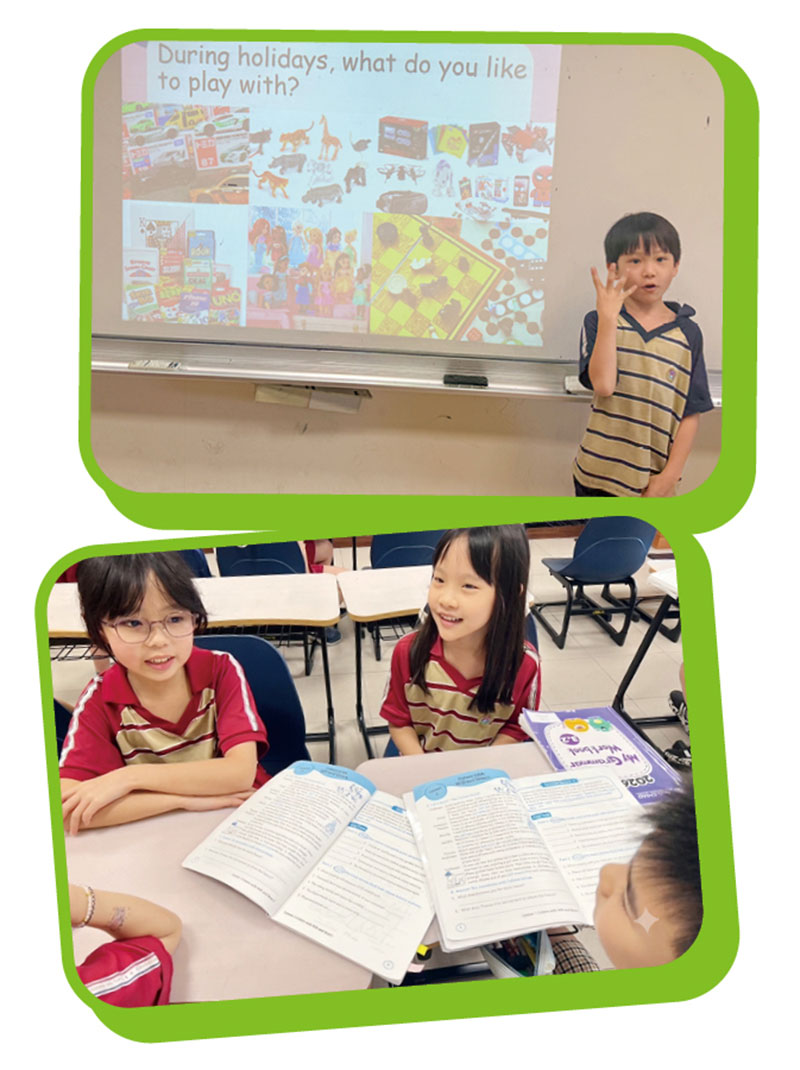
Lower-grade students learn about parts of speech such as nouns, verbs, and adjectives, which helps them understand what makes a complete sentence. Students also learn how to add detail and meaning. In a lesson on singular and plural nouns, students are asked to describe what toys or games they play with during holidays. To describe them, students must use correct grammar. “I have a puzzle and two board games.” Such experiences foster a strong foundation in grammatical knowledge, preparing students for increasingly sophisticated language use in the years ahead.
Middle-grade students already know how to create complete sentences with detail. At this stage, they further develop verb tenses in everyday situations. In the classroom, students may be planning their summer vacation with classmates by talking about where they will go and what they will do. “I will go to Japan with my family, and we will visit Disneyland in Tokyo.” “We are going to go to Canada next month.” In order to communicate clearly, students use tenses correctly. As you can see, students in the middle grades move beyond basic grammar concepts and begin applying their understanding of grammatical structures in increasingly sophisticated ways.
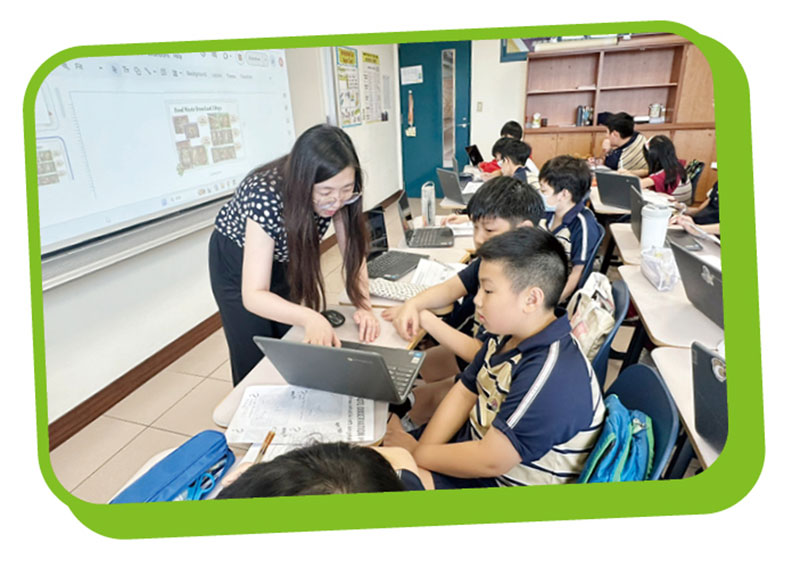
With the grammar foundation built from grades 1 to 4, upper-grade students begin learning how to use more advanced sentence structures in their writing, including complex and compound sentences. In the grade 5 Achieve Writing, Clean Trays, Less Waste, students explain why there is so much food waste at school and propose solutions to reduce it. They apply complex sentence patterns to explain cause-and-effect relationships clearly. “Most students don’t like the vegetables served during lunch, so that is why we have to throw away so many of them.” As students progress into the upper grades, they develop greater control over grammatical structures, allowing them to communicate complex relationships between ideas and produce deeper and richer texts.
From Grammar Rules to Real Communication
At Kang Chiao, teachers design grammar lessons according to students’ English ability and cognitive development. Through a well-organized learning progression from lower to higher grades, along with meaningful speaking and writing activities, students learn that grammar is not simply a set of rules to memorize. Instead, grammar becomes a practical tool that helps them communicate ideas clearly, express themselves confidently, and connect with others. By integrating grammar into real-life situations, Kang Chiao students develop both accuracy and confidence in using English.
From the Editor
More Than Rules, Growing with Language
國際處主任 賴國宜
When people think about learning grammar, they often imagine memorizing rules or completing worksheets. However, grammar is much more than that. At KCIS, we believe grammar is best learned through meaningful language use and authentic communication rather than isolated drills. Our lessons often begin with a specific scenario or conversation that allows students to notice how language is naturally used in context. Students then identify patterns, discuss concepts, and work out the rules together with guidance from the teacher. This approach helps students understand not only what the rule is, but also why it is used. If you would like to learn more about how grammar is taught across different grade levels, I highly recommend reading our curriculum coordinator Ms. Joyce’s article in this issue.
Time goes by quickly, and it is hard to believe that our Grade 6 students will soon graduate. Members of the English Reporter Club recently conducted surveys to discover Grade 6 students’ most challenging learning experiences. Please turn to the last page to read and share their heartfelt memories. We hope our graduate continue to face new challenges with confidence, kindness, and courage. No matter where their paths may lead, they will always remain an important part of the KCIS community. Best wishes to all of our graduates!
談到英文文法,許多人的印象可能是背誦規則或做不完的練習題。然而,文法的意義遠不止於此。每一種語言都有其獨特的結構與規律,而這些正是清楚溝通、閱讀理解與寫作表達的重要基礎。在康橋的文法課堂中,老師常從情境或對話出發,引導學生觀察語言如何自然地被使用,再透過討論、歸納與教師引導,逐步理解語言規則。孩子學到的不只是「規則是什麼」,更能理解「為什麼要這樣使用」。若您想進一步了解各年級如何進行文法教學,歡迎閱讀本期國際處課研組長Ms.Joyce的專文分享。
時間過得很快,六年級學生即將畢業。英文小記者社團也特別透過訪談與問卷,整理出六年級學生認為最具挑戰的學習經驗,邀請大家翻閱最後一頁,一同感受他們的成長與回憶。在此,也祝福所有畢業生,帶著自信與溫暖邁向新的旅程。無論未來走向何方,康橋永遠是你們共同成長與珍藏回憶的地方。