
~ Zachary Warmke
Assistant Director of Curriculum
For adults, modern life is dominated by digital devices. It’s almost impossible to imagine going back to the world of twenty or thirty years ago, when few people had an internet connection and smartphones didn’t exist. We teachers need to prepare young learners for the world they will enter when they become adults, including the technology they will work with.
This is a challenge because technology changes so quickly. We do, of course, train students to use several types of technology. They gain skills with iPads, Chromebooks, PCs, and 3D printers, as well as general online safety and research skills. But what if these tools change completely in the next few years?
Adaptable Skills
Our approach to solving this problem is not to focus on teaching students how to use specific tools or apps, but to establish foundational skills and good habits that will help students no matter how technology changes. Sometimes the difference is subtle, but important. We don’t teach students “how to research with Google,” but rather, “how to do research online with tools such as Google.” By focusing on general skills first and then using technology to enhance them, our students become more adaptable.
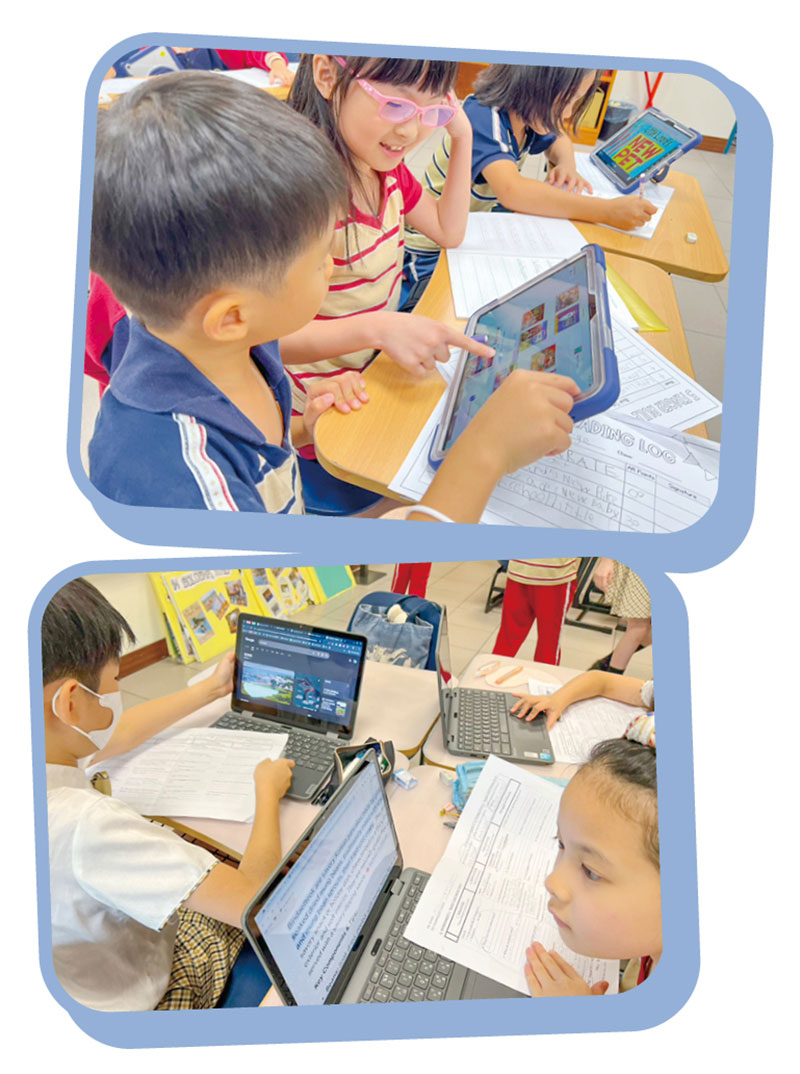
A perfect example came up in our recent grade 4 FET project, Living and Learning. In this project, students research how children around the world live their daily lives. Online research tools, including AI, help our students complete this research efficiently. However, the goal of the project was to learn how to identify important research questions and organize information. If we suddenly lost access to the internet, students could still complete this project using library books. The main learning goal does not depend on technology, but technology helps students reach the goal. In the future, students will be able to organize research and find information efficiently, even if their AI tools and technology are different.
Thinking About Thinking; Learning About Learning
This approach to using technology as a supporting tool aligns with KCIS’s approach to teaching English and other skills. Students not only learn to use foundational skills, but also to think critically. When we use technology in class, we teach students to think about how to use technology to help them achieve their goals in research, writing, organization, and more. They learn to consider which tools and apps can help them most.
This is the same philosophy we apply to language arts. Our English curriculum strongly emphasizes language arts skills like using text features and analyzing text structure. We teach students to analyze and think about the stories they read. They become experts on language arts skills.
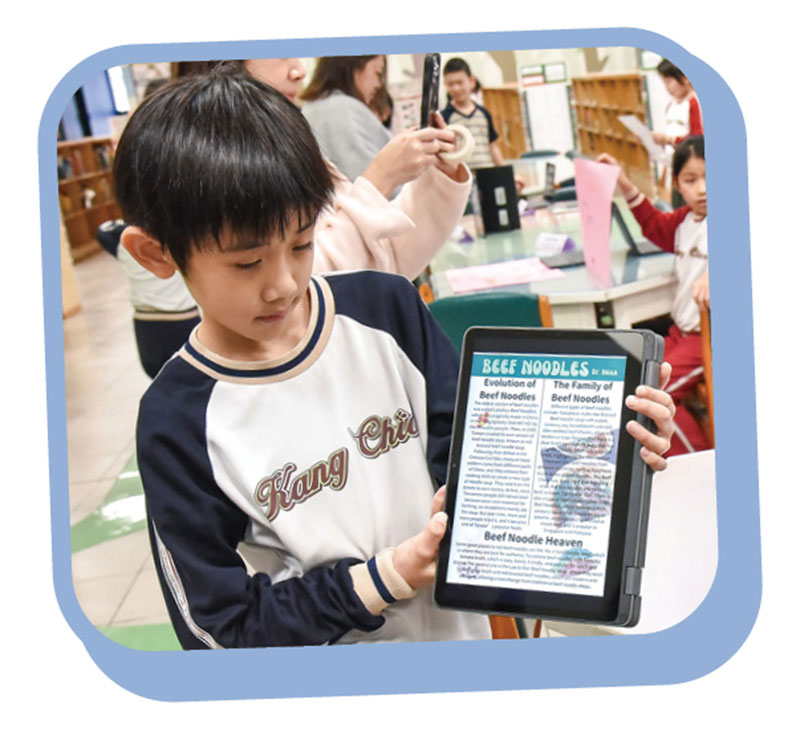
In informational texts, for example, students learn how to format text clearly, using bold headings and cause-and-effect writing structure. When they write projects, we teach them the value of those skills, whether their work is digital or not. If they create their final drafts using Google Docs, Canva, or a sheet of paper, the same communication and language arts skills apply.
Expectations and Limits of Technology
Although modern life seems to be centered on digital technology, we recognize the value of real-world learning over online interactions. At the heart of all of our work is the concept of authenticity, which means using language arts for real communication with peers and the community. Time spent working on a creative project with friends is infinitely more valuable than screen time. And no app or computer game can replace the connection students feel when they collaborate during a book club discussion or a fun group performance. While we will continue to update our technological and digital curriculum, we will always put meaningful interactions and real-life experiences at the core of our English program.
From the Editor
In the Age of AI, What Should Children Really Learn?
國際處主任 賴國宜
As part of PISA’s 2025 report Learning in the Digital World, schools around the world are rethinking what students really need for the future. Students are now assessed not only on what they know, but also on their ability to learn independently and to use technology to think and solve problems. In other words, it’s no longer just about what students know, but more importantly, how they learn.
This is also the key ideas we would like to share with you in this issue. At KCIS, we actively integrate digital tools into our classrooms. At the same time, we focus on helping students learn how to use technology purposefully and wisely. Today, children can find information easily with one click. However, real learning happens when they take time to think—by sorting ideas, comparing information, asking questions, and understanding what it means. Through this process, knowledge becomes something they truly understand and can use in real life.
由OECD(經濟合作暨發展組織)推動的 PISA 2025 Learning in the Digital World 指出,教育不應再只關注孩子「學會了什麼」,而是應更重視「如何學習」。這項國際評量的新指標強調兩大能力:一是自主學習,孩子能設定目標、專注投入並持續修正;二是運用科技解決問題,能透過數位工具探索、分析與創造,而非只是被動接收資訊。
這也正是這一期校刊想與您分享的核心議題:當孩子只要動動手指,透過 AI 就能找到答案,我們該如何重新定義「學習」。對我們而言,數位素養教育不只是將最新科技融入課堂,更重要的是培養孩子駕馭科技的能力。在資訊快速取得的時代,更要確保孩子經歷「分類、比較、判斷、內化」等思考歷程,才能將知識轉化為可運用的能力。
此外,這一期也邀請五年級的中籍英師團隊分享最新的寫作主題 My School Club Rocks,豐富多元的社團活動一直是康橋的重要特色,哪些社團最受孩子喜愛?他們在其中學到了什麼?誠摯邀請您閱讀學生們的作品,看看他們如何推薦自己的社團,還有在參與過程中學到哪些技能。